Ingredients
Method
- Make the dough first, so it can rest while you cook the filling. Mix the wheat flour, semolina and salt in a bowl. Pour over the hot ghee and rub it in with your fingertips until the flour looks like breadcrumbs — this moyan is what makes the shell crisp and blistered rather than hard. Add warm water a little at a time and knead to a firm, smooth dough, tighter than a chapati dough. Cover with a damp cloth and rest for 30 minutes.
- For the filling, put the grated coconut and jaggery in a pan on medium-low heat. Cook, stirring often, for 5 to 7 minutes, until the jaggery melts, coats the coconut, and the mixture thickens and leaves the sides of the pan with no liquid pooling at the base. It should be moist but not wet — an undercooked, runny filling will leak and burst the shells in the oil. Take it off the heat, stir in the cardamom, poppy seeds and nuts if using, and spread it on a plate to cool completely.
- Knead the rested dough for a minute until smooth, then divide it into about 12 equal portions and roll each into a ball. Keep them covered so they do not dry out.
- Roll one ball into a thin disc about 4 inches across, slightly thicker in the centre than at the edges. Cup the disc in your palm, place about 2 teaspoons of filling in the centre, and begin pleating: pinch the edge up into small, close folds all the way around, gathering them as you go, then bring all the pleats together at the top and pinch them into a sealed, pointed tip. Press gently to make sure there are no gaps. Set the shaped modak on a plate and keep it covered with a cloth while you shape the rest.
- Heat ghee or oil in a kadai to medium heat — a small piece of dough dropped in should rise slowly, bubbling gently, not sizzle violently. If the oil is too hot, the shells brown before they crisp and stay soft inside.
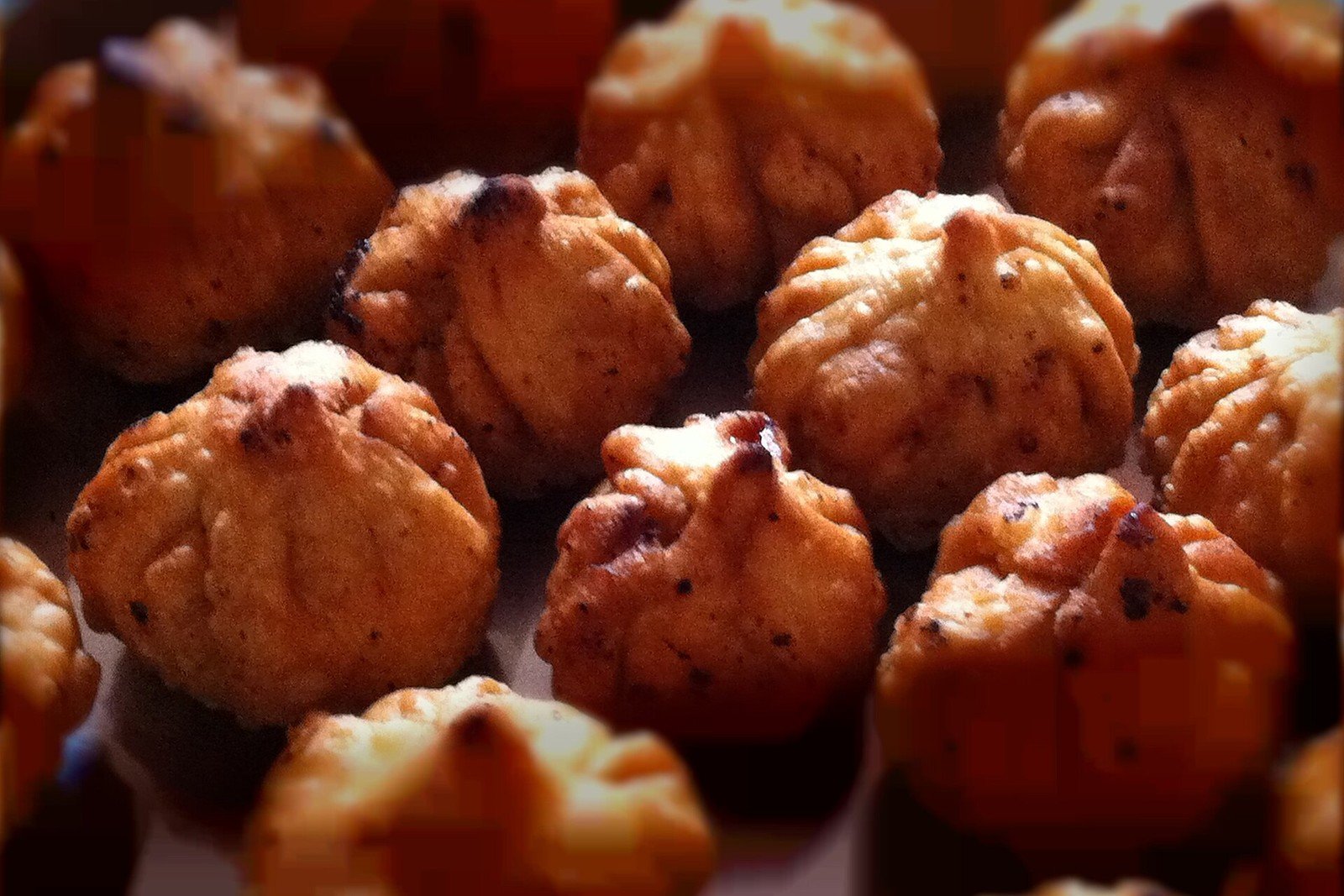
- Fry the modaks in batches of 4 to 5, without crowding the pan. Cook on medium-low heat for 4 to 5 minutes, turning them gently now and then, until they are deep golden brown and crisp all over — the pleated tips will be the darkest, and that is fine. Lift them out with a slotted spoon and drain on kitchen paper.
- Cool the modaks completely on a rack or plate before serving or storing — they crisp up further as they cool. Offer them fresh as prasad, or serve with a drizzle of warm ghee broken open over the top, the way they are eaten at home.
Notes
The filling must be dry and completely cool before shaping. Warm filling softens the dough from inside, and even slightly liquid filling expands in the hot oil and splits the seams. If your coconut was very juicy, cook it a minute or two longer — err on the dry side.
A firm dough is the fried modak's insurance policy. Soft dough drinks oil, goes limp instead of crisp, and tears at the pleats. If the shells feel fragile while shaping, rest the dough 10 minutes more; the semolina keeps absorbing water and the discs will roll out more obediently.
Frying temperature decides crispness more than time does. Steady medium-low heat cooks the shell through to its centre; modaks fried too fast look golden but turn soft within the hour. A correctly fried modak stays crisp for 4 to 5 days in an airtight tin — which is exactly why this version exists.
No pleating confidence yet? Seal them as half-moons, gujiya-style, pressing the edges with a fork. The shape differs but the flavours are identical, and many families make the Ganesh Chaturthi batch half-and-half while the children learn the pleats.