Ingredients
Method
- Prepare the khoya: crumble it finely with your fingers or grate it on the coarse side of a grater, breaking up every lump. Lumps left in now will survive as white, undercooked pockets in the finished pedas, so take a minute over this.
- Heat the ghee in a heavy, wide non-stick pan or kadai on the lowest heat. Add the crumbled khoya and cook, stirring and mashing continuously with a spatula, for 8 to 10 minutes. The khoya will first soften, then turn loose and glossy and begin to look almost like a thick batter as its fat melts — this is exactly right. Keep the heat low throughout; khoya scorches in seconds and even a faint browned smell will carry into the pedas.
- Add the powdered sugar and stir it in. The mixture will loosen again as the sugar melts — keep cooking on low heat, stirring without stopping, for another 10 to 12 minutes, until it thickens back into a single soft mass that pulls cleanly away from the sides of the pan and holds its shape when you gather it with the spatula. Stir in the cardamom in the last minute. If the mixture looks dry and crumbly instead of soft, work in warm milk a teaspoon at a time.
- Tip the mixture onto a greased plate and spread it out a little. Leave it to cool for about 20 minutes — until it is just warm and comfortable to handle, not cold. It firms up as it cools, so do not leave it too long or it will crack when you shape it.
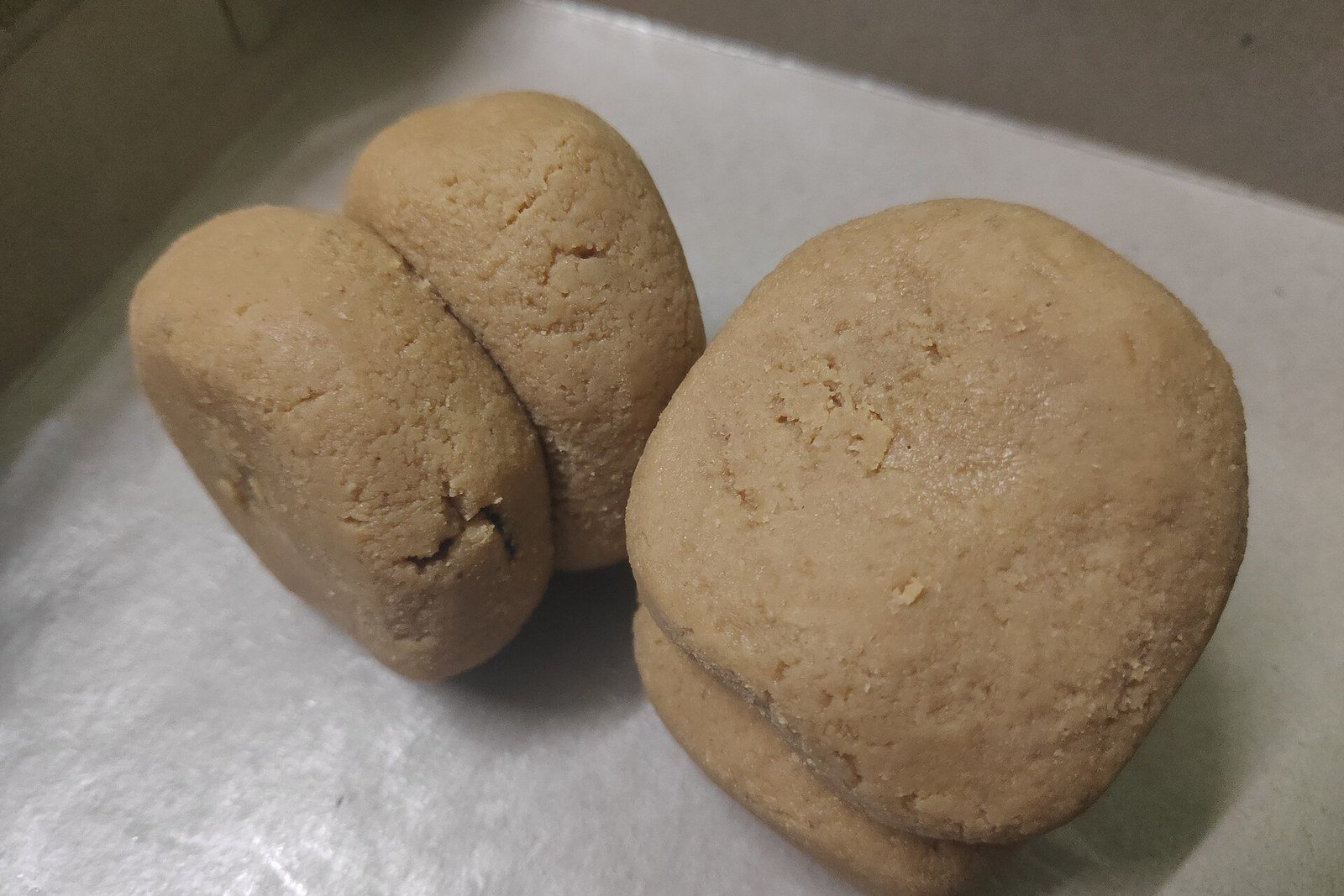
- Grease your palms lightly with ghee. Pinch off portions of the mixture and roll them into smooth balls, about the size of a small lime — you should get about 12. Flatten each ball gently between your palms into a thick disc and press a shallow dent into the centre with your thumb.
- Press a few pistachio slivers into the dent of each peda. Rest the shaped pedas at room temperature for 30 minutes to set their shape, then serve — with tea, after a meal, or packed into a box to give away, which is what pedas have always been for.
Notes
Low heat is the whole recipe. Khoya is concentrated milk solids and sugar in waiting; the moment the pan gets properly hot it browns and turns grainy. If you see the mixture catching at the base, take the pan off the heat for a few seconds and stir the heat out of it.
Judge doneness by the pan, not the clock. The mixture is ready when it leaves the sides cleanly and a small pinch, cooled for a few seconds, rolls into a ball that does not stick to your fingers. Undercooked peda mixture stays sticky and will not hold its shape; overcooked, it turns dry and cracks.
Sugar timing matters. Adding sugar before the khoya has fully melted makes the mixture weep liquid and extends the cooking; add it only once the khoya is loose and glossy, as in step 3.
Storage: mawa pedas keep well for 4 to 5 days in an airtight box at room temperature, and up to 10 days in the fridge — bring them back to room temperature before serving, when the texture turns tender again.