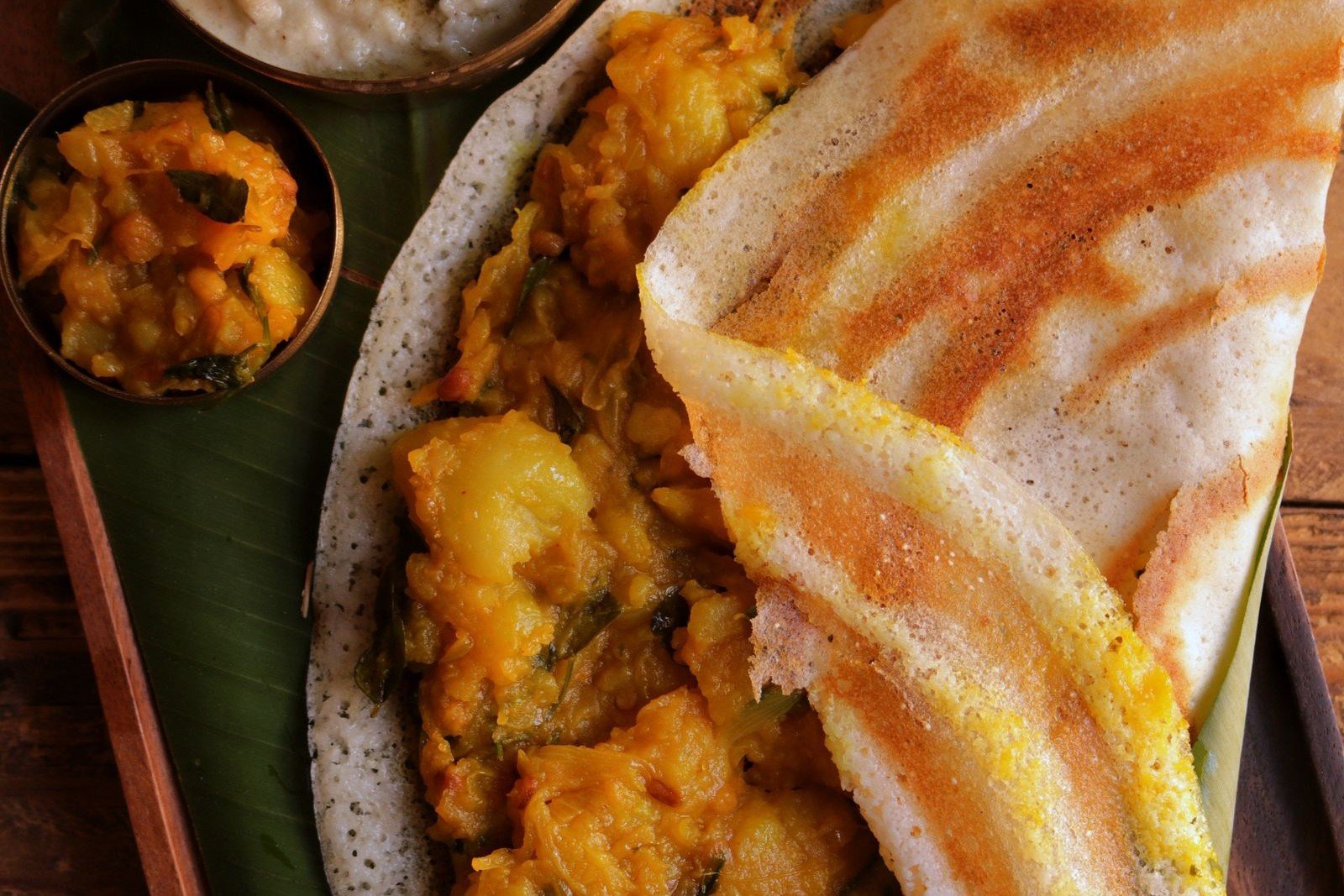
A great masala dosa is a study in contrasts: a paper-crisp, golden crepe with lacy edges, wrapped around soft, turmeric-yellow potato masala, with coconut chutney and hot sambar on the side. Almost everything depends on the batter — the right rice-to-dal ratio, grinding it smooth but not gluey, and fermenting it until it rises and smells faintly tangy. Get the batter right once, and dosas become a weekend ritual rather than a project.
Masala Dosa Recipe
A great masala dosa is a study in contrasts: a paper-crisp, golden crepe with lacy edges, wrapped around soft, turmeric-yellow potato masala, with coconut chutney and hot sambar on the side.
Ingredients
Method
- Rinse the rice until the water runs fairly clear and soak it in plenty of water. In a separate bowl, soak the urad dal with the fenugreek seeds. Soak both for at least 6 to 8 hours (or overnight).
- Drain the dal and grind it first with just enough cold water to a silky, fluffy batter — it should ribbon off the spoon. Empty it into a large bowl (leave room for rising).
- Grind the rice (with the poha, if using) to a smooth, slightly pourable batter. Mix it into the dal batter, add salt, and combine well with your hand — the warmth helps fermentation.
- Cover and ferment in a warm place for 8 to 12 hours, until the batter has risen, looks bubbly and smells pleasantly tangy. Stir gently; the consistency should be like a thick pouring batter — loosen with a little water if needed.
- For the masala: crumble the boiled potatoes into rough chunks (never mash smooth). Heat the oil in a pan, let the mustard seeds pop, then add cumin, curry leaves and asafoetida.
- Add the onion, green chillies and ginger. Sauté until the onion turns soft and translucent, not brown.
- Add turmeric and salt, then the potatoes with a splash of water. Mix gently and cook for 3 to 4 minutes so the potatoes take the colour and flavour. Finish with coriander and lemon juice; keep warm.
- Heat a cast-iron tawa until properly hot, then lower the heat to medium. Sprinkle a few drops of water to check — it should sizzle and evaporate in seconds. Wipe the tawa, grease it very lightly.
- Pour a ladleful of batter in the centre and spiral it outward quickly into a thin circle. Drizzle a teaspoon of oil or ghee around the edges.
- Cook undisturbed until the dosa turns deep golden and crisp and releases at the edges — do not flip it.
- Place a portion of potato masala in the centre, fold the dosa over it, and lift it out immediately. Serve hot with coconut chutney and sambar. Repeat, re-heating the tawa between dosas.
Notes
A cast-iron tawa seasoned with use gives the best crisp dosas; non-stick works but colours less evenly.
If the batter over-ferments and turns very sour, it is still fine for dosas — just not for idlis.
Refrigerated batter keeps 3 to 4 days; bring it to room temperature and stir in a pinch of salt before use.
The first dosa is the tawa’s test dosa — expect it to stick a little; the rest behave.
If the batter over-ferments and turns very sour, it is still fine for dosas — just not for idlis.
Refrigerated batter keeps 3 to 4 days; bring it to room temperature and stir in a pinch of salt before use.
The first dosa is the tawa’s test dosa — expect it to stick a little; the rest behave.