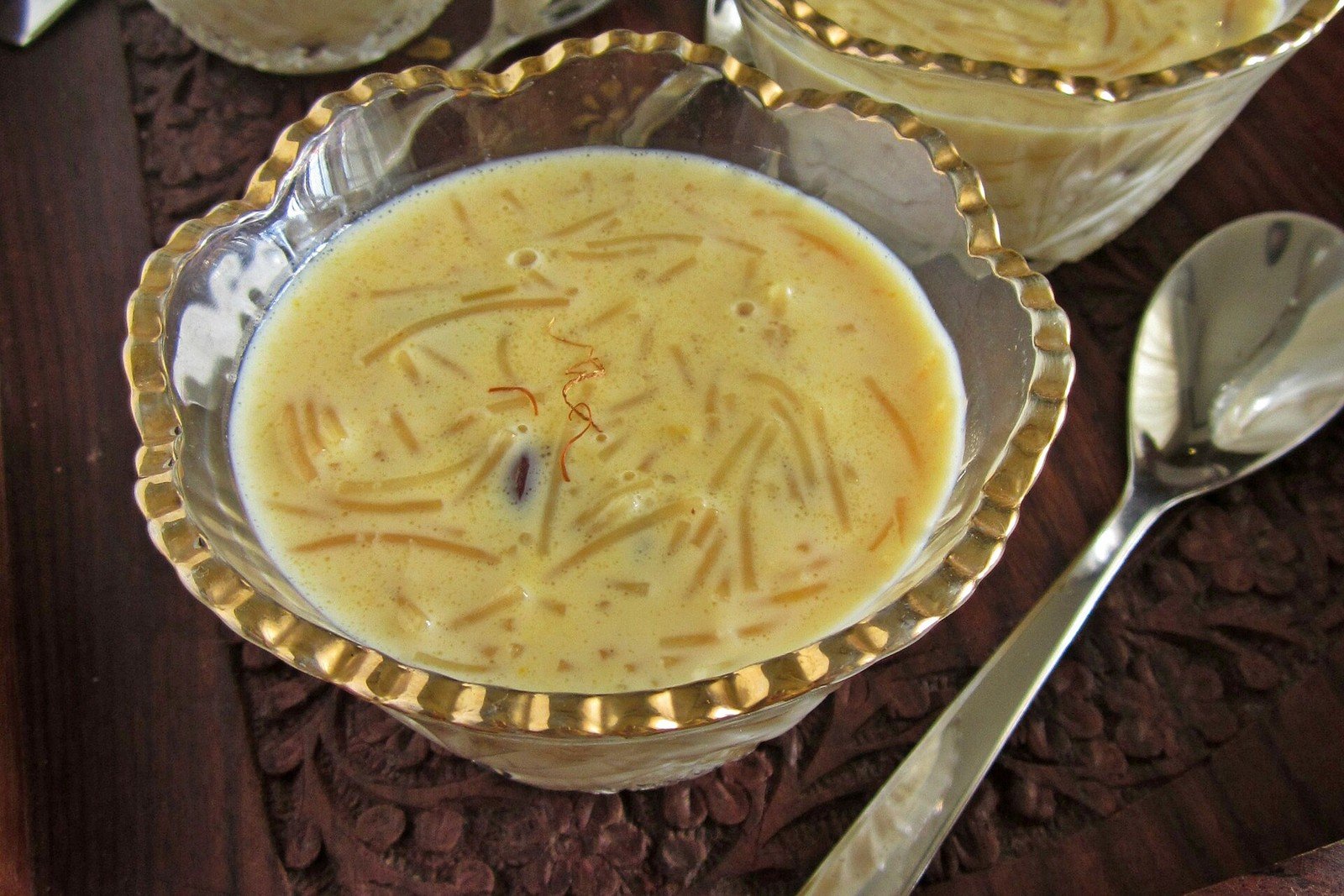
Semiya payasam is the sweet that closes a South Indian festive meal — and the one that appears, with almost no warning, when guests arrive and something celebratory has to reach the table within half an hour. Fine vermicelli, roasted in ghee until it turns the colour of pale gold, simmers in milk until the strands soften and the milk itself takes on body, and the whole thing is perfumed with cardamom and crowned with ghee-fried cashews and raisins. A payasam is not a kheer that happens to be thin: it is meant to be pourable, drunk as much as eaten, served warm in a tumbler or a small bowl — so this recipe aims for that flowing consistency and tells you exactly how to rescue it if yours thickens in the pot.
Ingredients
Method
- Start with the garnish, because everything else moves quickly: melt the ghee in a deep, heavy pan on medium-low heat, add the cashews and fry until golden, then add the raisins and fry until they swell and puff. Lift both out onto a small plate, leaving the ghee in the pan.
- In the same ghee, add the vermicelli and roast on low heat for 3 to 4 minutes, stirring constantly, until the strands turn an even pale gold and smell toasted. Vermicelli burns at the edges in seconds once it starts to colour, so do not walk away from this step. (If you have bought pre-roasted vermicelli, give it just 1 minute in the hot ghee to wake up the flavour.)
- Pour in the milk and bring it to a gentle boil on medium heat, stirring often so the vermicelli does not clump or settle and catch on the base. Once it boils, lower the heat and simmer for 6 to 8 minutes, until the vermicelli strands are completely soft and have swollen, and the milk has taken on a light body from their starch.
- Stir in the sugar, the cardamom, the saffron milk if using, and the pinch of salt. Simmer for another 3 to 4 minutes, until the sugar has dissolved and the payasam looks like a thin, flowing custard — it should coat the back of the spoon lightly and pour in a stream, not fall in dollops.
- Take the pan off the heat and stir in the fried cashews and raisins, saving a few for the top. Rest the payasam for 10 minutes before serving: it will thicken a little as it sits and the strands will absorb more milk, which is expected — judge the final consistency after this rest, not straight off the flame.
- Serve warm, ladled into small bowls or tumblers, with the reserved nuts and raisins scattered over. If the payasam has thickened more than you like by serving time, stir in a splash of hot milk until it pours again.
Notes
Pourable is correct. The most common mistake with semiya payasam is cooking it to kheer thickness in the pot, then watching it set almost solid as it cools. Stop the cooking while it still looks slightly too thin — it will arrive at the right place on its own.
Keep the milk moving while the vermicelli simmers. Vermicelli sinks, and a layer left sitting on the base will scorch and flavour the whole pan with one bitter note.
Sugar goes in only after the vermicelli is fully soft. Added too early, it can slow the strands’ cooking and leave them firm in the centre no matter how long they simmer.
Leftovers keep in the fridge for up to 2 days and will thicken considerably. Reheat gently on low heat with extra milk stirred in until pourable again — do not boil hard, or the milk may split. It is also very good served chilled, once loosened the same way.