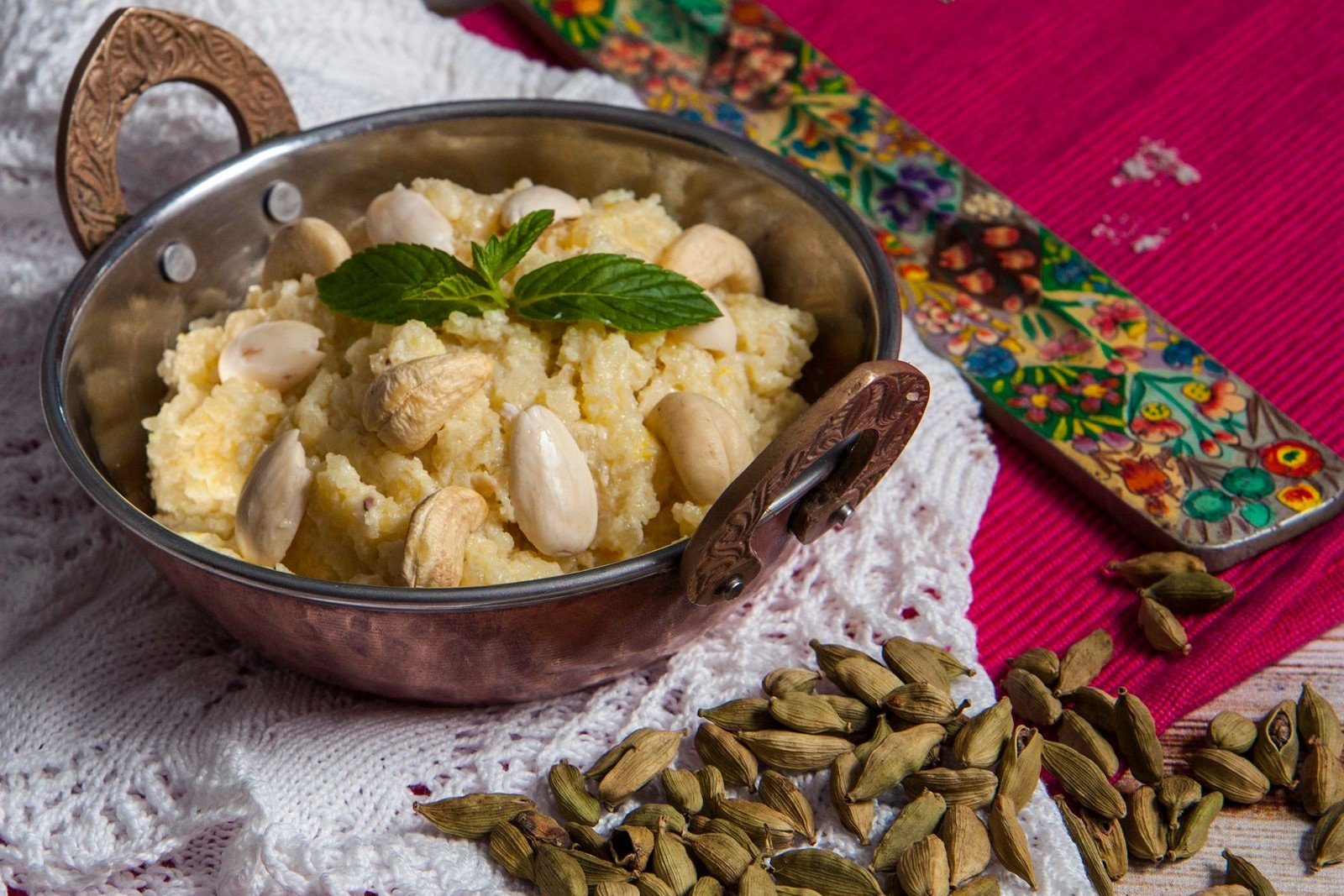
Palkova is proof that two ingredients and a lot of patience can outdo any complicated sweet — full-cream milk stirred and stirred in a wide pan until it gives up its water and gathers into a soft, grainy, pale-gold mass, sweetened at the very end so the milk flavour stays in front. It is the famous sweet of Srivilliputhur in Tamil Nadu, sold warm from sweet shops and eaten by the spoonful, and its texture is its signature: not smooth like a peda, not set like a barfi, but tender and faintly grainy, melting almost before you can chew. All it asks of you is a heavy pan and an unhurried hour.
Ingredients
Method
- Choose the right pan: a wide, heavy-bottomed kadai or pan, the wider the better — a broad surface lets the milk reduce faster. Rinse the pan with water and leave a film of moisture in it before pouring in the milk; this helps stop the milk catching on the base.
- Bring the milk to a boil on medium heat, stirring so a skin does not sit undisturbed on top, then lower the heat to medium-low. Let it simmer and reduce, stirring every few minutes and scraping the sides and base of the pan each time, folding any cream that collects on the sides back into the milk — that cream is flavour and body, never discard it.
- Keep reducing for 40 to 50 minutes in total. The milk will pass through stages: first loose and foamy, then creamy and coating the spoon, then thick enough that the spoon leaves a trail on the base of the pan. It should reduce to roughly a quarter of its original volume and turn a shade deeper, from white to pale cream.
- If you want the classic grainy texture, stir in the lemon juice or curd now, a little at a time, and watch the thickened milk turn faintly granular without actually splitting into whey. Stop as soon as you see the grain — you want curdled-looking softness, not paneer. Skip this step entirely for a smoother palkova.
- Add the sugar and stir it in. The mixture will loosen noticeably as the sugar melts — do not panic, this is expected. Cook on low heat for another 8 to 10 minutes, stirring almost constantly now, until it thickens again.
- Finish: stir in the ghee and the cardamom powder, if using, and cook for 2 to 3 minutes more until the palkova is a soft, glossy mass that comes together, leaves the sides of the pan and holds the spoon’s trail for a few seconds. It should still look slightly loose and spoonable — it firms up a good deal as it cools, so take it off earlier than instinct suggests.
- Tip into a greased bowl or plate and leave to cool to warm. Serve spooned into small bowls with the slivered nuts scattered over, if you like — or eat it the Srivilliputhur way, plain and still warm, straight off the spoon.
Notes
Patience at low heat is the entire recipe: high heat scorches the milk solids in minutes, and one burnt layer at the base flavours the whole batch. If the base does catch, change pans without scraping the burnt bits in.
Add the sugar only at the end. Sugar added early stops the milk reducing properly, makes the palkova runnier, and dulls its fresh milk taste.
Judge the finish while it is warm, not hot off the stove: correct palkova looks a touch too soft in the pan and sets into a tender, grainy fudge as it cools. Cooked until it looks set in the pan, it turns dry and crumbly on the plate.
Store leftovers in the fridge for up to 4 to 5 days and bring them back to room temperature, or warm for a few seconds, before serving — cold palkova tastes muted next to the warm version.