Introduction
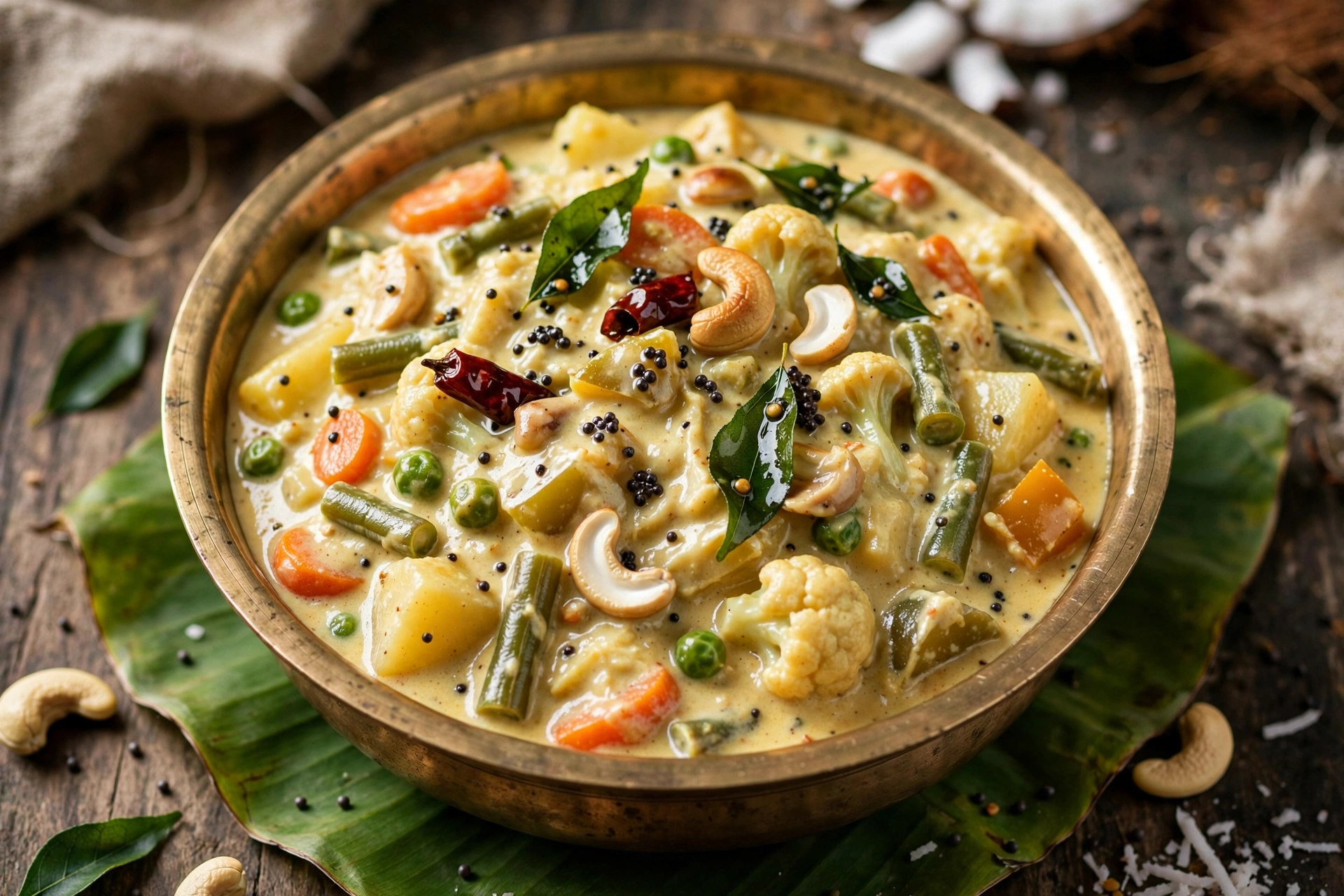
Vegetable kurma is a creamy, mildly spiced South Indian curry — mixed vegetables simmered in a coconut and cashew-based gravy with curry leaves and gentle spices. Unlike North Indian curries, it gets its richness from coconut rather than cream. Wonderful with idli, dosa, appam or plain rice.
Recipe facts
Preparation time: 15 minutes. Cooking time: 25 minutes. Total time: 40 minutes. Servings: 4. Difficulty: Easy.
Ingredients
- 3 cups mixed vegetables (carrots, beans, peas, potatoes, cauliflower), chopped
- 2 tablespoons coconut oil or vegetable oil
- 1 teaspoon mustard seeds
- 1 teaspoon urad dal (optional)
- 10–12 curry leaves
- 1 large onion, finely chopped
- 1 tablespoon ginger-garlic paste
- 2 green chillies, slit
- 1 medium tomato, chopped
- ½ teaspoon turmeric powder
- 1 tablespoon coriander powder
- 1 teaspoon salt, or to taste
For the kurma paste (grind together):
- ½ cup fresh grated coconut (or desiccated coconut soaked in warm water)
- 10 cashew nuts, soaked 15 minutes
- 2 tablespoons roasted chana dal (dalia)
- 1 teaspoon fennel seeds
- ½-inch piece of cinnamon, 2 cloves, 2 cardamoms
Instructions
- Grind all the kurma paste ingredients with ½ cup water into a smooth, thick paste. Set aside.
- Heat oil in a kadhai. Add mustard seeds; when they pop, add urad dal and curry leaves.
- Add the onion and sauté 5 minutes until soft. Add ginger-garlic paste and green chillies; cook 1 minute.
- Add the tomato, turmeric, coriander powder and salt. Cook 5 minutes until the tomato softens.
- Add the mixed vegetables and 1 cup water. Cover and cook 10–12 minutes until the vegetables are almost tender.
- Stir in the ground kurma paste and ½ cup more water. Simmer uncovered on low heat for 8–10 minutes, stirring occasionally, until the gravy thickens and the raw coconut taste disappears.
- Check salt, garnish with coriander leaves and serve hot with idli, dosa, appam, chapati or rice.
Helpful tips
Grind the coconut paste very smooth — a coarse paste makes the gravy grainy. Simmer the paste long enough; undercooked coconut tastes raw. The gravy thickens as it cools, so keep it slightly loose on the stove.
Substitutions
No fresh coconut? Use tinned coconut milk (200 ml) plus the ground cashews and spices. Replace vegetables with paneer cubes or mushrooms for delicious variations.
Storage
Refrigerate for up to 3 days in an airtight container. Coconut-based gravies reheat well on low heat; stir in a splash of water if too thick. Freezes well for up to 1 month.
Frequently asked questions
Is kurma the same as korma? They are cousins: South Indian kurma is coconut-based and milder; North Indian/Mughlai korma is yoghurt or cream-based and richer.
Can I make it without coconut? You can, using extra cashews and a little milk, but coconut is the signature flavour of this dish.
Why did my gravy split? High heat can split coconut gravies. Always simmer gently on low once the coconut paste goes in.
Ingredients
Method
- Grind all the kurma paste ingredients with ½ cup water into a smooth, thick paste. Set aside.
- Heat oil in a kadhai. Add mustard seeds; when they pop, add urad dal and curry leaves.
- Add the onion and sauté 5 minutes until soft. Add ginger-garlic paste and green chillies; cook 1 minute.
- Add the tomato, turmeric, coriander powder and salt. Cook 5 minutes until the tomato softens.
- Add the mixed vegetables and 1 cup water. Cover and cook 10–12 minutes until the vegetables are almost tender.
- Stir in the ground kurma paste and ½ cup more water. Simmer uncovered on low heat for 8–10 minutes, stirring occasionally, until the gravy thickens and the raw coconut taste disappears.
- Check salt, garnish with coriander leaves and serve hot with idli, dosa, appam, chapati or rice.