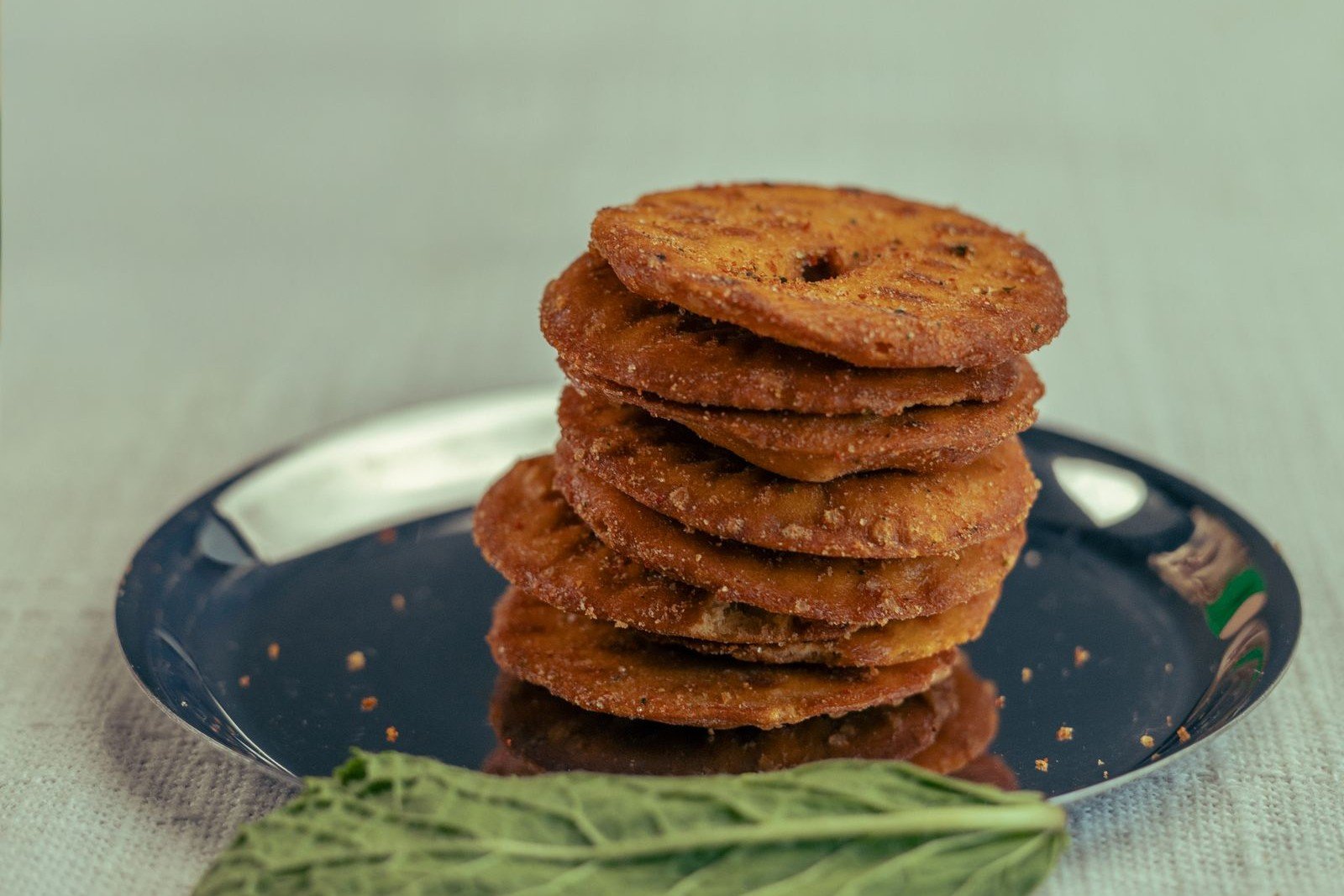
Thattai are the flat, crackling discs that Tamil homes fry up by the dozen when a festival is near — rice flour pressed thin, fried until it blisters and turns the colour of light caramel, and seasoned with cumin, sesame and curry leaves so every bite is savoury right through. The name itself comes from the Tamil word for flat, and flat is the whole point: the thinner you press them, the crisper they shatter. They keep for weeks in a tin, which never actually happens, because a batch of thattai next to the evening filter coffee has a very short life indeed.
Ingredients
Method
- Make the dough: put the rice flour, urad dal flour, besan, sesame seeds, cumin, red chilli powder, asafoetida, curry leaves and salt in a wide bowl and mix well. Rub in the melted butter until the flour looks like coarse crumbs — this is what makes the thattai crisp rather than hard.
- Add the drained chana dal (and the peanuts, if using), then sprinkle in water a spoonful at a time and knead into a stiff, smooth dough that holds together without cracking. It should be firmer than a chapati dough; a soft dough drinks oil and fries up limp. Cover and rest for 10 minutes.
- Divide the dough into about 20 small balls, roughly the size of a large gooseberry, and keep them covered with a damp cloth so they do not dry out.
- Press the discs: grease a thick plastic sheet, a zip-lock bag cut open, or a piece of banana leaf with a little oil. Place a ball on it, cover with another greased sheet, and press down evenly with the flat base of a bowl or your palm into a thin round disc of about 2 to 2.5 inches. The edges may crack a little — that is normal and even pretty. Prick each disc in two or three places with a fork so it does not puff up like a poori in the oil.
- Heat oil in a kadai on medium heat. Test with a tiny piece of dough — it should rise steadily, sizzling gently, not shoot up and brown at once.
- Slide the pressed discs in, a few at a time without crowding, peeling each one carefully off the sheet. Fry for 1 to 2 minutes until the sizzling calms, then flip and fry the other side until the discs are deep golden and completely crisp. If they colour too fast, lower the heat — the centres need time to cook through.
- Drain on kitchen paper and leave to cool completely; thattai crisp up fully only as they cool, so resist judging the first one while it is still warm.
- Once cold, store in an airtight tin at room temperature — they keep crisp for 2 to 3 weeks, if they last that long.
Notes
Thin and even wins: a thick centre stays soft no matter how long you fry it, and a disc that is thin at the edges but thick in the middle will never crisp evenly. Press patiently.
The dough must stay stiff. If it softens as it stands (rice flour keeps absorbing and releasing moisture), knead in a teaspoon more rice flour rather than frying a slack batch.
Do not skip the fork pricks — an unpricked thattai puffs, traps steam and turns leathery instead of crisp.
The chana dal must be drained really well after soaking; surface water splutters in hot oil and loosens the dough. Soaked dal that stays slightly firm in the finished thattai is exactly right — it gives a nutty bite in every few mouthfuls.