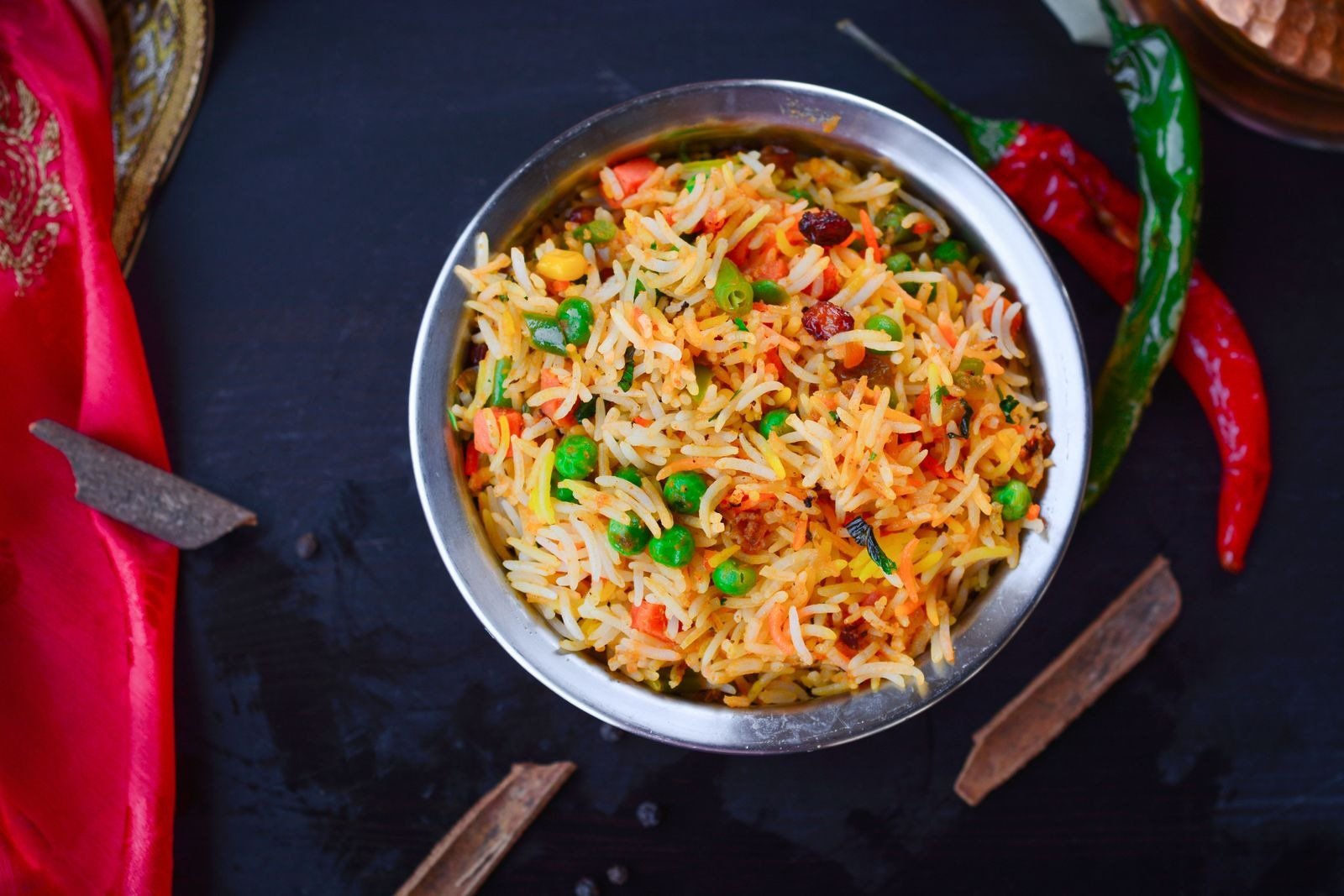
Dindigul, in Tamil Nadu, is a town that takes its biryani seriously, and its style is unlike the long-grained biryanis of the north. It is built on seeraga samba, the small, round, intensely fragrant local rice, cooked with the masala rather than layered over it, with coconut milk for body, mint for freshness, a firm hand with black pepper and a finishing squeeze of lemon that gives the dish its signature gentle tang. This vegetable version keeps that whole character — short grains, deep spice, everything married in one pot — and comes together beautifully in a pressure cooker or a heavy, tight-lidded pot.
Ingredients
Method
- Temper the spices: heat the oil in a pressure cooker or heavy pot on medium heat. Add the bay leaves, cinnamon, cardamom, cloves, star anise and fennel seeds and fry for a few seconds until they swell and smell fragrant.
- Build the base: add the shallots and fry for 6 to 8 minutes until soft and golden at the edges. Add the ginger-garlic paste and green chillies and fry for a minute, until the raw smell leaves.
- Add the tomatoes with a pinch of salt and cook for 4 to 5 minutes, stirring and mashing, until they soften into the onions and the oil begins to shine at the sides.
- Add the turmeric, red chilli powder, garam masala and black pepper. Stir for a few seconds, then add all the vegetables, mint and coriander and sauté for 3 minutes so the pieces are coated in masala.
- Lower the heat and stir in the whisked curd a spoon at a time so it does not split. Cook for 2 minutes until the masala looks thick and glossy.
- Add the drained rice and stir very gently once or twice — seeraga samba grains are small and break easily once soaked. Pour in the coconut milk and water, add the lemon juice and salt, and bring to a gentle boil. Taste the liquid: it should be distinctly salty and tangy, as the rice will absorb both.
- Cook it through: pressure cook on medium heat for 1 whistle, then lower the flame and cook for 5 more minutes before switching off (in a lidded pot: cover tight and cook on the lowest flame for 18 to 20 minutes). Let the pressure settle on its own for 10 minutes — do not force it open.
- Rest and fluff: open, scatter over a few fresh mint leaves and a spoon of ghee if you like, then fluff the rice gently from the sides with a fork, lifting rather than stirring, so the small grains stay whole.
- Serve hot with onion raita and a lemon wedge — in Dindigul this biryani is traditionally eaten with a tangy accompaniment, and plain curd or raita is the home-style match.
Notes
Seeraga samba is the soul of this dish: its grains are short and round, it drinks up masala, and it perfumes the whole pot. If you must substitute, use sona masoori or another short-grain rice and keep the same water ratio; basmati gives a different, layered-style result.
The lemon is not decoration — Dindigul biryani is deliberately a little tangy, and the acid also keeps the grains separate. Add it with the water, not at the end.
Keep the pepper freshly ground and do not be shy with it; a gentle pepper heat in the background is a Dindigul signature alongside the chilli.
Shallots, sesame (gingelly) oil and coconut milk are the three quiet ingredients that make this taste of Tamil Nadu rather than anywhere else — each has a substitute above, but together they are worth seeking out.