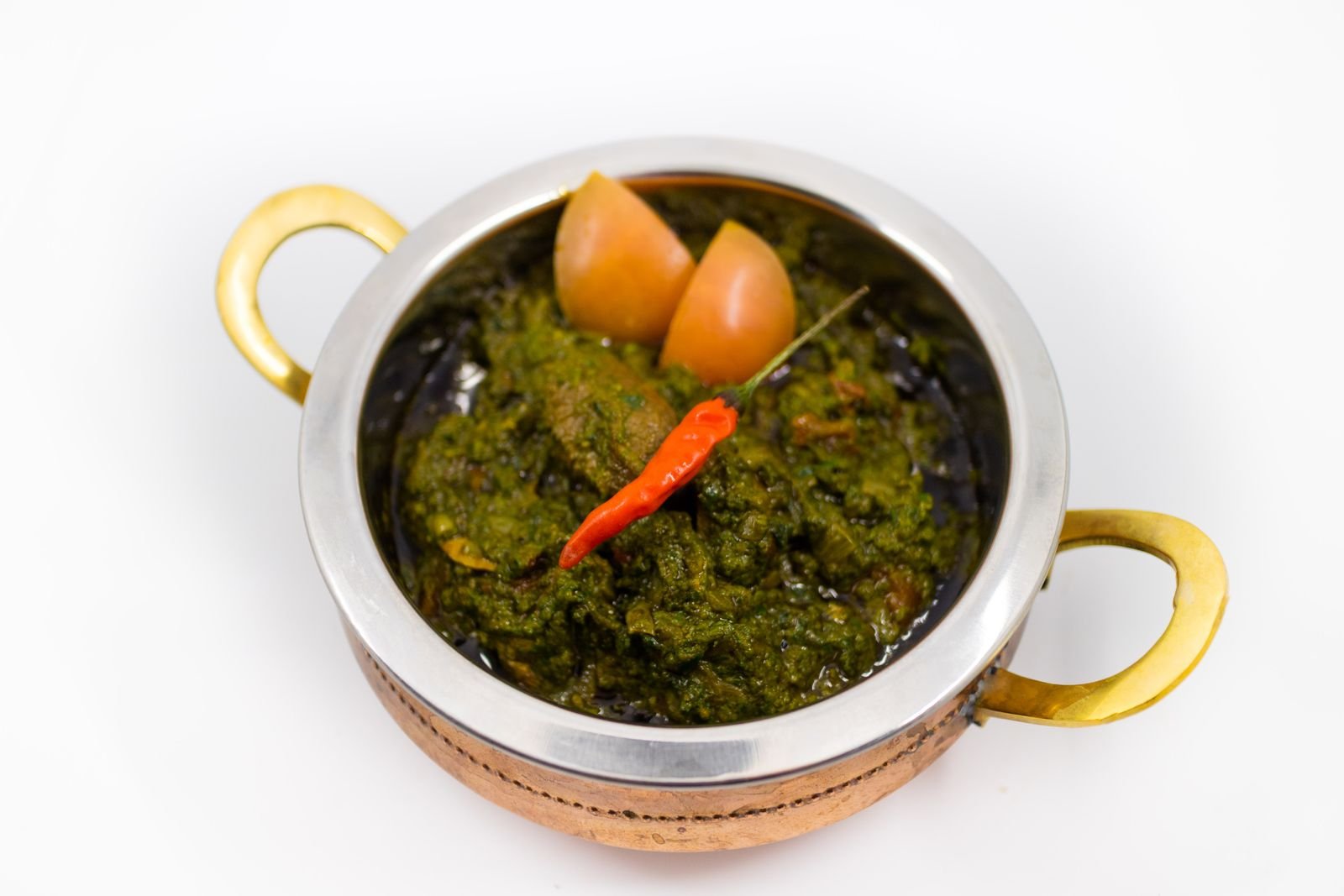
Sarson ka saag is Punjab’s winter on a plate — mustard greens slow-cooked with bathua and spinach until they melt into a deep green mash, finished with a white butter dollop and served with makki ki roti. It is not a quick dish and it is not supposed to be: the long, patient cooking is what takes the raw bite out of the mustard leaves and turns them silky. Make a big pot — saag tastes even better the next day.
Ingredients
Method
- Wash all the greens thoroughly in several changes of water — mustard leaves hold grit. Drain well.
- Pressure cook: put the sarson, bathua, spinach, onion, tomato, garlic, ginger, green chillies, salt and about 1 cup of water in a pressure cooker. Cook on medium for 3 to 4 whistles (about 15 minutes after the first whistle) until everything is completely soft.
- Let the pressure release naturally. Drain the greens through a colander, RESERVING the cooking water — it is full of flavour and goes back in later.
- Blend the greens coarsely: use a hand blender in short pulses, or the traditional wooden madani, until you have a coarse, textured mash. Do not puree it smooth — saag must have body.
- Return the mash to the pot with some of the reserved water. Sprinkle in the makki ka atta a spoon at a time, stirring constantly so no lumps form. Simmer on the lowest heat for 20 to 25 minutes, stirring often, until thick, dark and glossy. Add more reserved water if it catches at the bottom. Check the salt.
- Make the tempering: heat the ghee in a small pan. Add the garlic and fry until golden at the edges, then the onion and cook until deep golden. Add the ginger juliennes, dried red chillies and asafoetida; fry a few seconds more.
- Pour half the tempering into the saag and stir it through. Serve the saag in bowls, spoon the rest of the tempering on top, and finish with a knob of white butter melting into the middle. Eat with hot makki ki roti.
Notes
The 2:1:1 ratio (sarson : bathua : spinach) keeps the mustard’s character without its full bite. If your sarson is very pungent, shift a little more spinach in.
Makki ka atta is the traditional thickener and also sweetens the saag slightly. Besan (gram flour) works in a pinch but the flavour is different.
Saag freezes beautifully for up to a month — freeze it WITHOUT the tempering and add a fresh tadka when reheating.
Leftover saag makes an excellent stuffing for parathas the next morning.